Timing Synchronization in Software Defined Radios (SDR)

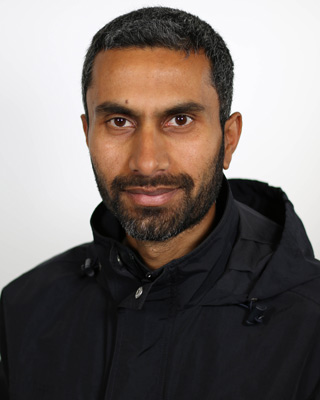
Qasim Chaudhari · Watch Now · DSP Online Conference 2020 · Duration: 45:20

A Software Defined Radio (SDR) merges the two fields of digital communication and digital signal processing into an efficient implementation of transmitters and receivers. One outcome of this combination is an interesting perspective on how timing synchronization is performed in digital communication receivers. This session will explain the timing synchronization problem in both time and frequency domains and then discuss in detail a timing locked loop consisting of timing error detectors, loop filter, interpolation and interpolation control. Insights into the relation of timing synchronization with general receiver design will also be presented.

What this presentation is about and why it matters

This talk explains how a digital receiver finds the right instants to sample symbols in a software defined radio (SDR). Timing synchronization is the process that aligns the receivers sampling instants with the transmitted symbol boundaries so that the matched filter output is taken at the points of maximum signal energy and minimum inter-symbol interference. Without good timing recovery, constellations spread, bit-error rates rise and otherwise sound signal-processing algorithms fail.

Why this matters in practice: modern radios move almost all functions into software. That makes timing recovery a DSP problem, often implemented as a timing-locked loop (TLL) that runs sample-by-sample, interpolates missing samples, and adapts slowly to clock drift and offsets. The talk breaks the TLL into digestible parts (timing error detectors, loop filter, interpolator and controller) and ties theory (spectral "timing lines", squaring trick) to practical choices you must make when designing an SDR receiver.

Who will benefit the most from this presentation

  • DSP engineers building or tuning SDR receivers (GNU Radio, Soapy, embedded DSP, FPGA front-ends).
  • Graduate students and engineers learning receiver design: practical view of timing recovery beyond textbooks.
  • Anyone implementing symbol-rate sampling, interpolation, or loop design (PI loop tuning, TED selection).
  • Developers converting analog timing fixes into fully digital timing-locked loops.

What you need to know

To get the most from the talk, be comfortable with these ideas:

  • Sampling and symbols: a transmitter emits symbols with period $T_M$ (symbol period). The receiver ADC runs at a sample period $T_s$; the goal is to extract one sample per symbol at the optimum instant.
  • Pulse shaping and matched filtering: common pulses (root-raised-cosine) create Nyquist signalling. Sampling at the pulse peak yields zero inter-symbol interference; offsets produce neighboring-symbol leakage and constellation smearing.
  • Eye diagram: a visual summary of timing quality; the maximum eye opening is the ideal sample point. TEDs operate on eye-slope or sample comparisons to estimate timing error.
  • Phase/TIming-locked loop analogy: a TLL mirrors a PLL: a detector forms an error proportional to timing phase error, a loop filter shapes dynamics, and a numerically-controlled oscillator (NCO) or interpolator controller produces fractional timing adjustments.
  • Squaring trick: squaring certain modulated waveforms creates spectral lines at the symbol rate. Identity: $\cos^2\theta = \tfrac{1}{2}(1+\cos 2\theta)$ — squaring doubles frequency and produces timing lines near $\pm 1/T_M$ plus DC; those lines can be extracted for timing phase information.
  • TED flavors: derivative (slope-based), early-late, Gardner (zero-crossing based, often NDA), and Mueller-Muller are popular choices; some are decision-directed and some are non-data-aided.
  • Interpolation: the ADC usually does not produce samples exactly at the symbol instants. Interpolators (linear, quadratic, cubic or polyphase filters) compute the missing sample at fractional delay $\mu$. The TLL produces that fractional control slowly via a modulo-1 counter and controller logic.
  • Loop design: the PI loop uses proportional gain $K_p$ and integral gain $K_i$; choose a damping factor $\zeta$ and a loop noise bandwidth $b_n$ to compute gains based on TED gain $K_d$ and NCO gain $K_0$.

Glossary

  • SDR (Software Defined Radio): a radio where modulation, filtering and synchronization are done in software/DSP rather than fixed analog circuitry.
  • Timing synchronization: aligning receiver sample instants to transmitted symbol boundaries to minimize inter-symbol interference.
  • Symbol period ($T_M$): the time duration of one transmitted symbol; symbol rate is $1/T_M$.
  • Matched filter: a filter matched to the transmit pulse (often root-raised-cosine) used to maximize SNR and form the receivers eye diagram.
  • Eye diagram: overlay of successive symbol intervals showing eye opening and timing margin; used to visualize timing errors.
  • Timing Error Detector (TED): the block that produces a signal proportional to timing phase error (examples: derivative, early-late, Gardner).
  • Gardner detector: a popular non-data-aided TED that uses interpolated mid-symbol samples and adjacent samples to estimate timing error.
  • Interpolator: a filter that computes a sample at a fractional delay $\mu$ between ADC samples (linear, cubic, polyphase implementations).
  • Loop filter (PI): proportional-plus-integral filter that shapes loop dynamics and produces the slow timing adjustment command.
  • NCO (Numerically Controlled Oscillator): a digital timing engine whose phase/frequency is steered by the loop filter to produce fractional timing control.

Final words

This presentation gives a clear, practical breakdown of timing recovery in SDRs: it connects spectral intuition (squaring and timing lines), control-block design (PI loop), and implementation details (interpolation and modulo-1 controller). The speakers step-by-step decomposition makes a complex diagram approachable and gives you the parts you need to prototype or tune a real timing-locked loop. If you build or study receivers, the talk is a compact, hands-on guide that will repay close attention.

Formatting help
italicssurround text with
*asterisks*
boldsurround text with
**two asterisks**
hyperlink
[hyperlink](https://example.com)
or just a bare URL
inline code
surround text with single
`backticks`
code block
(multi-line)
wrap on its own lines with three backticks:
```
your code here
```
strikethroughsurround text with
~~two tilde characters~~
quote
prefix with
>

Doini
Score: 0 | 6 years ago | no reply

Thank you very much for the nice presentation!

ashahein
Score: 0 | 6 years ago | no reply

Thank you very much for the informative and thorough talk.

RayS
Score: 0 | 6 years ago | no reply

That was an impressively effective presentation of quite a complex topic!

Lungsi
Score: 0 | 6 years ago | 1 reply

Thanks for the presentation. When will the slides be available?

qasimSpeaker
Score: 0 | 6 years ago | 1 reply

Conference organizers will make them available soon.

Stephane.Boucher
Score: 0 | 6 years ago | no reply

qasim, could you please send the slides to us again or simply upload them yourself (check the upload box on the left-hand side). Thanks!

Justin
Score: 0 | 6 years ago | 1 reply

Hi Mr. Chaudhari! Thank you very much for your meticulous talk on the underlying theory!
Is it okay to ask for a copy of the slides you used in the video?

qasimSpeaker
Score: 0 | 6 years ago | no reply

Definitely. Conference organizers will soon make them available.

Brett
Score: 0 | 6 years ago | 1 reply

Thank you Qasim for the presentation. I'm an embedded DSP software engineer on an SDR system and this helps me understand better what our signal processing comm engineers are doing and keep up to date with the latest time synchronization algorithms. You covered a lot but I think it was the right amount and presented in a digestible way for this format. I'll have to check out your book and website.

qasimSpeaker
Score: 0 | 6 years ago | no reply

Thanks for the appreciation. Glad you liked it : )

Vodnir
Score: 0 | 6 years ago | no reply

Very interesting. I'll have to go over all of this a second time because there's so much I didn't know! :P

Norwood
Score: 0 | 6 years ago | 1 reply

Thanks, Qasim! Currently porting different SDRs to Xilinx's RFSoC.

qasimSpeaker
Score: 0 | 6 years ago | no reply

Good to know that.