Linear Algebraic Perspective on the FFT/IFFT and Its Role in the OFDM Modulations Employed in 4G/5G

Jeff Correia · Watch Now · DSP Online Conference 2024 · Duration: 01:55:38

Linear Algebraic Perspective on the FFT/IFFT and Its Role in the OFDM Modulations Employed in 4G/5G
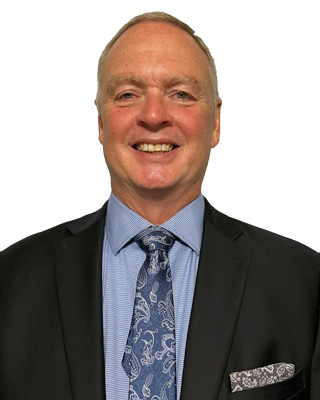
Jeff Correia

This talk will be a tutorial on the Orthogonal Frequency Division Multiplexing (OFDM) Modulations and variants employed in 4G/5G and how they are parameterized via the forward/inverse Fast Fourier Transforms (FFT/IFFT). The talk will discuss the complex baseband formulation of the underlying digital modulations used via a brief introduction to quadrature amplitude modulation, its complex baseband representation, and subsequent extension into OFDM. The talk will address the FFT/IFFT properties employed in the conceptual formulation of the scheme and will motivate how thinking about the FFT/IFFT in a linear-algebraic sense can add insight into the complicated-looking structure of the FFT/IFFT and other transforms used in engineering sciences.


What this presentation is about and why it matters

This talk gives a linear-algebra view of the FFT/IFFT and explains how those transforms are used to build Orthogonal Frequency Division Multiplexing (OFDM) waveforms in 4G and 5G cellular systems. Rather than only treating the FFT as a black-box algorithm, the speaker frames the DFT/FFT as an inner-product decomposition: the transform coefficients are dot products against orthogonal complex exponentials (basis vectors), and synthesis is the inverse operation. That viewpoint ties basic signal-processing math to practical issues in modern wireless: subcarrier spacing, FFT size, sampling rate, cyclic prefix, channel equalization, and the resource grid used by LTE/NR.

Why this matters: OFDM is the physical-layer backbone of practically every modern broadband cellular link. Understanding the FFT as a vector-space operation helps engineers reason about orthogonality, spectral packing, timing tolerance, and how RF impairments (multipath, fading, time/frequency offsets) interact with the transform. Those insights make it easier to design, debug, and optimize systems that use FFT-based modulation and demodulation.

Who will benefit the most from this presentation

  • DSP engineers who implement or test OFDM-based physical layers (LTE, 5G NR).
  • Communications engineers and RF engineers who need intuition about subcarrier spacing, cyclic prefix, and channel equalization.
  • Students learning the DFT/FFT and wanting an interpretation beyond algorithmic steps — especially with a focus on sampled baseband signals (IQ).
  • Software engineers building signal-processing toolchains (simulators, spectrum analyzers, IQ recorders) who want the conceptual link between matrix operations and time/frequency processing.

What you need to know

The talk keeps math accessible, but a few core concepts will make the most of it:

  • Complex baseband / IQ notation: real RF is represented by complex baseband samples, where a real transmitted waveform can be recovered by x_I(t)cos(2πf_ct) + x_Q(t)sin(2πf_ct). Familiarity with Euler's identity e^{jθ}=cosθ+j sinθ helps.
  • DFT/IDFT formulas: recognize the discrete Fourier transform as a set of inner products. The forward and inverse pair used in the talk are

    $X[k]=\sum_{n=0}^{N-1} x[n] e^{-j2\pi kn/N}$ and $x[n]=(1/N)\sum_{k=0}^{N-1} X[k] e^{j2\pi kn/N}$.

  • Inner-product (vector-space) view: each DFT row is a complex exponential basis vector. The transform coefficient is the inner product of the input with that basis; synthesis recombines coefficients times basis vectors. Orthogonality and normalization of those basis vectors explain why subcarriers do not interfere when parameters align.
  • FFT vs. DFT: the FFT is an efficient algorithm to compute the DFT; it doesn’t change the mathematical transform or its orthogonality properties, only the computational cost.
  • OFDM construction: take a set of complex modulation symbols (QAM constellation points), place them onto DFT bins, use the IFFT to synthesize a multi-tone time-domain OFDM symbol, and append a cyclic prefix to protect against multipath delay spread.
  • Cellular parameters: subcarrier spacing = fs/N, examples: 15 kHz (LTE/NR μ=0), 30 kHz, 60 kHz. FFT size and sample rate are chosen so that spacing matches the desired grid (e.g., 30.72 MHz sample rate with 2048-pt FFT gives 15 kHz bins).

Glossary

  • DFT — Discrete Fourier Transform: the linear transform that maps N time samples to N frequency coefficients via inner products with complex exponentials.
  • FFT — Fast Fourier Transform: an efficient algorithm to compute the DFT.
  • IFFT — Inverse FFT: synthesizes time samples from frequency-domain coefficients (used to generate OFDM symbols).
  • OFDM — Orthogonal Frequency Division Multiplexing: multi-carrier modulation where subcarriers are orthogonal complex exponentials.
  • Subcarrier spacing — frequency spacing between adjacent FFT bins; equal to sampling rate divided by FFT size.
  • Cyclic prefix (CP) — copied tail samples prepended to each OFDM symbol to convert linear convolution (channel) into circular convolution and protect against ISI from multipath.
  • QAM — Quadrature Amplitude Modulation: complex-valued constellation used to map bits to complex symbols placed on subcarriers.
  • Resource block / resource grid — the 2-D allocation of subcarriers (frequency) and OFDM symbols (time) used in LTE/5G scheduling.
  • Coherence time / coherence bandwidth — time/frequency regions over which the channel response can be treated as approximately constant; drives pilot density and numerology choice.
  • Equalization — the process of estimating and correcting for channel-induced amplitude and phase distortions across subcarriers.

Closing note

Jeff Correia’s presentation blends practical cellular parameters with a clean linear-algebra interpretation of the FFT/IFFT. If you want intuitive connections between matrix inner products, orthogonal basis functions, and everyday cellular engineering choices (FFT size, sampling rate, cyclic prefix, subcarrier spacing), this talk gives both the math and the engineering context. The speaker’s emphasis on intuition over formal proofs makes the material approachable while still directly applicable to real 4G/5G design and testing work — a nice balance for practitioners and students alike.

1 / 6
Please log in or create an account to test your knowledge and see the answers.

Why does the speaker present QAM constellations using complex baseband (I/Q) notation for cellular signals?

A Because complex numbers are literally transmitted over the air and the receiver decodes them directly.
B Because representing symbols as I/Q complex numbers maps amplitude and phase to the real (cosine) and imaginary (sine) components, allowing those to be combined into a real passband waveform.
C Because using complex baseband significantly reduces the occupied RF bandwidth compared with real-valued waveforms.
D Because complex baseband eliminates the need for a carrier oscillator at the transmitter.
E Because it's purely a visualization trick with no influence on how the signal is generated or transmitted.
Formatting help
italicssurround text with
*asterisks*
boldsurround text with
**two asterisks**
hyperlink
[hyperlink](https://example.com)
or just a bare URL
inline code
surround text with single
`backticks`
code block
(multi-line)
wrap on its own lines with three backticks:
```
your code here
```
strikethroughsurround text with
~~two tilde characters~~
quote
prefix with
>

RandyYates
Score: 0 | 9 months ago | 1 reply

Hi Jeff, blown away by the technical content in this presentation! You must have one of the highest number of graphics per page of any presentation I've seen recently!

JeffCorreiaSpeaker
Score: 0 | 9 months ago | no reply

Thank you Randy. I've always felt that it's the pictures that really drive the story home!

DanBoschen
Score: 1 | 2 years ago | 1 reply

Very informative and a nice intro to comm for newcomers to wireless in the first part followed by a great overview of critical PHY details in 4G/5G in the last part. Thanks Jeff.

JeffCorreiaSpeaker
Score: 0 | 2 years ago | no reply

Thanks Dan, glad it was worth your time!!