
Home > On-Demand Archives > Talks >
Digital Signal Processing for Satellite Communications
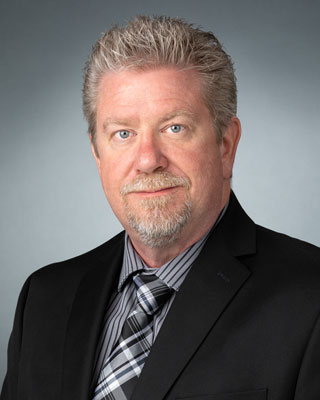
Bradford Watson - Watch Now - DSP Online Conference 2024 - Duration: 01:20:22
Communications satellites are a booming business, and are increasingly using sophisticated DSP techniques to manage bandwidth for users distributed over wide geographic areas. There are several flavors of satellite communications, that include transponded and regenerative digital payloads for commercial and military platforms.
This talk gives an overview of the market, the end-to-end system level view, the actual digital processing that takes place onboard a satellite, specifications, and challenges of designing systems for spaceflight.
This guide was created with the help of AI, based on the presentation's transcript. Its goal is to give you useful context and background so you can get the most out of the session.
What this presentation is about and why it matters
This talk gives a practical, system-level tour of where digital signal processing (DSP) sits inside modern communications satellites. Bradford Watson connects industry trends (GEO vs LEO, small-sat constellations, bandwidth demand) to the concrete DSP building blocks you'll meet on a payload: ADC/DAC front ends, digital tuners, polyphase decimators/interpolators, channelizers (analysis filter banks), routers and synthesis filter banks, equalizers/predistorters, and regenerative modems.
Why it matters: if you design or test DSP algorithms for communications systems, you need to understand how those algorithms are placed and constrained on real spacecraft. Space brings unusual design drivers — extreme constraints on size, weight and power (SWaP), stringent dynamic-range requirements, radiation effects, and the need for highly efficient polyphase / FFT-based processing. This talk ties those constraints to algorithmic choices you might otherwise treat in isolation.
Who will benefit the most from this presentation
- DSP engineers who are new to satellite payloads and want a practical overview of the signal chain and system tradeoffs.
- FPGA/ASIC designers and systems engineers who must map filter banks, decimators/interpolators, and channel routing onto constrained hardware.
- Graduate students and researchers interested in communications DSP applications (channelizers, beamforming, interference mitigation) in a real-world setting.
- Engineers evaluating COTS parts for space or working on radiation-tolerant design practices.
What you need to know
Keep these concepts in mind before watching — they appear repeatedly in the talk and are essential for following the technical tradeoffs.
- Orbit types and link geometry: GEO gives fixed coverage and wide beams; LEO requires constellations and handoffs because beams move with the satellite.
- Transponder vs regenerative payload: Transponders are "bent-pipe" relays (spectral routing and amplification); regenerative payloads demodulate/remodulate (full digital modems) and are common in secure military systems.
- ADC/DAC + analog front end: RF is downconverted to an ADC-friendly IF/baseband; anti-alias filters and reconstruction filters matter for distortion and equalization.
- Digital tuning and complex samples: Real ADC samples are turned into analytic I/Q streams via a digital tuner or Hilbert transform so frequency shifts and demodulation become complex multiplies.
- Polyphase decimation/interpolation: Efficient FIR-based resampling is implemented as polyphase structures to reduce arithmetic while meeting linear-phase requirements for phase-encoded signals. If input sample rate is $F_s$ and you decimate by $L$, the output rate is $F_{out} = F_s / L$.
- Channelizers and synthesis filter banks: Analysis (channelizer) splits a wide spectrum into many coherent narrow subchannels (FFT/polyphase); synthesis recombines them coherently for transmission. These are the core building blocks for flexible bandwidth allocation on a satellite.
- Equalization and predistortion: Used to invert RF amplitude/phase distortion and to linearize power amplifiers so modulation constellations survive the analog chain.
- Dynamic range and ADC quality: A useful metric is ENOB. From SINAD (dB) you can estimate
$ENOB = (SINAD - 1.76)/6.02$
High dynamic range (40–60 dB or more) and good ENOB are often required on satellite receivers. - Noise Power Ratio (NPR): A test that measures channel crosstalk and quantization noise by observing how much a spectral notch is filled after the full digital chain — typical good systems show NPRs in the 40–60 dB range.
- Space constraints: SWaP, thermal extremes, radiation (SEU/SEL), and vibration/launch survivability strongly influence algorithm and hardware choices. Techniques like TMR and scrubbing for FPGAs are commonly used.
Glossary
- Transponder: Bent-pipe payload that frequency-shifts and amplifies RF without demodulating user data.
- Regenerative payload: Payload that demodulates and remodulates signals (contains modems and digital processing for routing and security).
- ADC (Analog-to-Digital Converter): Converts RF/IF analog waveforms into digital samples; its ENOB and SINAD determine effective precision.
- DAC (Digital-to-Analog Converter): Converts processed digital samples back to analog for RF upconversion and transmission.
- Polyphase filter bank / Channelizer: Efficient FFT-based analysis filter bank that splits a wideband signal into many narrow, coherent subchannels.
- Synthesis filter bank (Reconstructor): The reverse of the channelizer; coherently recombines subchannels into a composite transmit spectrum.
- Equalizer / Predistorter: Digital filters that flatten amplitude/phase or compensate PA nonlinearity to preserve modulation fidelity.
- ENOB (Effective Number of Bits): A single-number ADC performance metric derived from SINAD, useful for system-level quantization budgeting.
- NPR (Noise Power Ratio): A test metric that quantifies in-band crosstalk and quantization noise by measuring notch fill-in.
- SWaP: Size, Weight and Power — the dominant engineering constraint for satellite payloads.
Final notes
Bradford Watson delivers a clear, practical walkthrough of how DSP is embedded inside satellite payloads, with helpful emphasis on constraints that change how you design algorithms versus a textbook environment. Expect useful perspective if you want to translate DSP ideas (polyphase filter banks, equalization, channel routing) into hardware-aware, space-ready implementations. The talk balances system context and algorithm detail in a way that makes the subject approachable and immediately relevant.
Thank you! I appreciate the feedback.
I've found your books very useful as well, especially Streamlining Digital Signal Processing.
Thanks so much for giving this talk, it was great to listen to.
Many years ago, I worked on ground segment gateway software for a geo-stationary satellite telephony system (which I believe is still in use primarily for radio applications in hard-to-reach places). My software was pretty far downstream from the signal processing - call setup processing and authentication checks, and things like that. Now, in a completely different industry, I'm getting to work a little DSP, and seeing your presentation from those perspectives was really enjoyable.
Allen Kwiatkowski
Thanks for listening! It's an interesting subject, and enjoyable to present. I appreciate your comment.
The Q&A may be boring. Each time a question came to mind, it was then addressed within the presentation. Excellent job! Thank you!
Not boring at all! I had a lot of good engagement. Thanks for listening!
Hello Bradford. Very informative and professional presentation. Thank you so much.