
Home > On-Demand Archives > Talks >

Digital Signal processing for Hearing Aids, Constant Q Filter Banks

fred harris - Watch Now - DSP Online Conference 2024 - Duration: 01:37:01
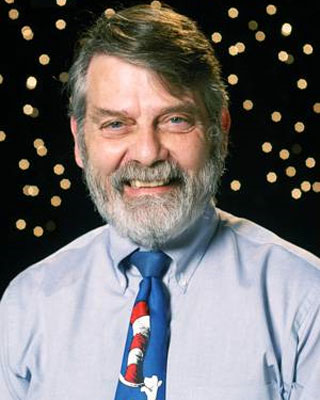
Digital Signal processing for Hearing Aids, Constant Q Filter Banks
fred harris

In this presentation, we will show FIR bandpass filters with an unusual spectral variation. We describe why we want that variation and then show how to design and implement it.

We have need for bandpass filters with selectable and different transition bandwidths on its left (lower frequency) and right (higher frequency) sides. Now why would we need that? We need this to build proportional bandwidth filter banks. In such a bank, channel bandwidths are proportional to channel center frequency. This means that the filter above my band has a higher bandwidth with a wider transition bandwidth and the filter below my band has a lower bandwidth and a narrower transition bandwidth.

To obtain a perfect reconstruction filter bank, the transition bandwidths of my band must match the transition bandwidths of the filters below and above my band. Thus, my filter must have a lower transition bandwidth on its lower edge than it has on its upper edge. Can we design a filter to do that? Yes! Why? Ask the hearing aid filter bank designer (or ask me)!

One problem with reduced bandwidth filters with reduced transition bandwidth is they have increased filter length. Increased length means more computational work. We include multirate processing to reduce filter length in the reduced bandwidth filters.


This guide was created with the help of AI, based on the presentation's transcript. Its goal is to give you useful context and background so you can get the most out of the session.

What this presentation is about and why it matters

This talk demonstrates a practical method for building constant‑Q (proportional‑bandwidth) FIR filter banks intended for low‑delay, low‑power applications such as hearing aids. It answers two tightly coupled engineering problems: (1) how to make adjacent bandpass channels whose left and right transition widths differ (necessary for true proportional bandwidths across octaves), and (2) how to keep computational cost and end‑to‑end latency low by combining multirate processing and minimum‑phase design.

Why this matters: hearing aids and many audio/spectrum‑analysis systems need filters that follow the cochlea’s roughly logarithmic frequency spacing and bandwidths. Standard symmetric FIR design tools usually produce equal left/right transitions and linear phase — both undesirable here. The methods in the talk enable nearly perfect reconstruction across logarithmic bands, shorter synthesis delay (critical for lip‑reading and comfort), and much less battery drain by using downsampling where bandwidths shrink.

Who will benefit the most from this presentation

  • DSP engineers designing audio and hearing‑aid channelizers or low‑power filter banks.
  • Students and researchers learning multirate filter design, filter banks, and phase control in FIR designs.
  • Audio engineers concerned with perceptual latency (e.g., live monitoring, hearing aids, assistive devices).
  • Anyone implementing perfect‑reconstruction analysis/synthesis systems where channels are logarithmically spaced.

What you need to know

Here are the core concepts you should be comfortable with to get the most from the talk:

  • FIR basics: impulse response length, windowed‑sinc construction, and how transition width and stopband attenuation relate to filter length.
  • Q and proportional bandwidth: the quality factor is Q = f_c / BW, i.e. $Q = f_c / BW$. Constant‑Q means channel bandwidths scale with center frequency, not fixed Hz widths.
  • Normalized bandwidth and multirate trick: reducing the sample rate by 2 when bandwidth halves keeps the normalized transition width the same, so filter length does not grow with each octave. Use $\Delta f_{norm}=\Delta f/f_s$ when thinking about normalized transitions.
  • Complementary filters and -6 dB crossing: to glue adjacent bands with perfect reconstruction, the two band filters must be amplitude complements at the crossover (they typically cross at −6 dB for 50/50 energy split in QMF‑like designs).
  • Asymmetric transition widths via cascade of complements: build each bandpass by cascading the low‑pass of the upper neighbor with the complementary high‑pass of the lower neighbor (or vice versa). That yields left/right transitions that differ by the required factor (e.g., sqrt(2) for two bands per octave).
  • Phase control and delay tradeoffs: linear‑phase FIRs give symmetric impulse responses but large group delay. Minimum‑phase FIRs with the same magnitude response can be obtained by folding zeros inside the unit circle to reduce group delay for faster AGC and perceptual alignment.
  • Numerical/root issues: converting zero sets back to polynomials is numerically sensitive for high orders; the talk explains pragmatic reconstruction tricks (split roots into several groups before forming polynomials) to avoid catastrophic precision loss.

Glossary

  • Constant‑Q: Filter bank where each channel’s bandwidth is proportional to its center frequency (fixed Q = f_c/BW).
  • Filter bank (channelizer): A set of bandpass filters that splits the input spectrum into multiple channels for independent processing.
  • QMF (Quadrature Mirror Filter): Complementary filter pair that sum to a (near) flat response and permit perfect reconstruction.
  • Transition bandwidth: Frequency span over which a filter moves from passband to stopband; controls filter length.
  • Linear phase: Phase vs. frequency is linear → constant group delay; symmetric FIR impulse response.
  • Minimum phase: All zeros inside unit circle → faster energy arrival (smaller group delay) for same magnitude response.
  • Multirate: Using decimation/interpolation (down/up sampling) to reduce computation when bandwidths shrink.
  • Spectral inversion: Technique to form a high‑pass from a low‑pass FIR by sign flipping and adding a delta at center.
  • Poly (root↔coefficient): Converting zero locations to polynomial coefficients; numerically sensitive for high order.
  • Perfect reconstruction: Analysis + synthesis result in (nearly) the original waveform with minimal amplitude/phase error.

Final notes — why watch this talk

Fred Harris presents an elegant blend of practical tricks and theoretical insight: asymmetric transition design by cascading complements, the smart use of multirate stages to avoid exploding filter lengths, and the pragmatic path from linear‑phase to minimum‑phase via zero folding (plus the numerical strategies needed to implement it). If you care about building low‑latency, battery‑efficient channelizers or just want a compact tour through applied multirate and phase‑aware FIR design, this talk is full of useful ideas, clear engineering tradeoffs, and real implementation tips you can reuse.

Enjoy the talk — expect hands‑on design tricks, useful caveats about numerical root handling, and a reminder that small algorithmic changes can make a big practical difference in low‑power audio systems.

M↓ MARKDOWN HELP
italicssurround text with
*asterisks*
boldsurround text with
**two asterisks**
hyperlink
[hyperlink](https://example.com)
or just a bare URL
code
surround text with
`backticks`
strikethroughsurround text with
~~two tilde characters~~
quote
prefix with
>

RichardLyons
Score: 0 | 1 year ago | no reply

Hi fred. Wow. I had no idea how much signal processing takes place in a modern day hearing aid.

twacks
Score: 0 | 1 year ago | no reply

Fascinating talk by Fred Harris as usual! Thank you for being you Fred :)

christophe.blouet
Score: 0 | 1 year ago | no reply

Thank you, very inspiring